Origins
It was created in 1930 through the Hague Agreements, nominally to process German reparations payments under the Young Plan after World War I. But it immediately became something broader. Its founding members were the central banks of Belgium, France, Germany, Italy, Japan, the UK and a consortium of American banks (the Federal Reserve was politically blocked from joining directly so private American banks took the seat instead). That detail alone is telling from day one.
When reparations became irrelevant after Germany defaulted, the BIS did not dissolve. It reinvented itself as a coordination forum for central banks and has been expanding its role ever since.
The Nazi Period and Why It Matters
This chapter is important and often skipped.
During World War II the BIS continued operating with board members from both Allied and Axis nations sitting together. Thomas McKittrick, an American, served as BIS president throughout the war. The BIS processed gold for Nazi Germany, including gold that had been looted from occupied nations and almost certainly included gold taken from Holocaust victims. When US Treasury official Henry Morgenthau discovered this he pushed hard at the 1944 Bretton Woods conference to dissolve the BIS entirely. The motion actually passed. The BIS was voted to be liquidated.
It never happened. A combination of European central bankers and quiet American financial interests buried the resolution and the BIS survived. This is not conspiracy, it is documented in the Bretton Woods conference records. Adam LeBor wrote about this in detail in his book Tower of Basel.
Legal Status: Genuinely Extraordinary
The BIS operates under a 1987 Headquarters Agreement with Switzerland that grants it privileges no other institution on earth quite matches.
Its premises are inviolable. Swiss authorities cannot enter under any circumstances without explicit permission from the BIS itself. Its archives and documents cannot be seized or searched. Its communications cannot be intercepted. Its officials enjoy personal immunity from legal proceedings indefinitely, even after they leave the organization. It pays no Swiss taxes of any kind. It can hold assets and conduct transactions in complete secrecy. No freedom of information law applies to it anywhere. No parliamentary body in any country has oversight over it.
To be clear this goes beyond diplomatic immunity. An embassy can technically be stormed in extreme circumstances and diplomats can be expelled. The BIS has no such vulnerabilities written into any legal framework anywhere.
Physical Location and Structure
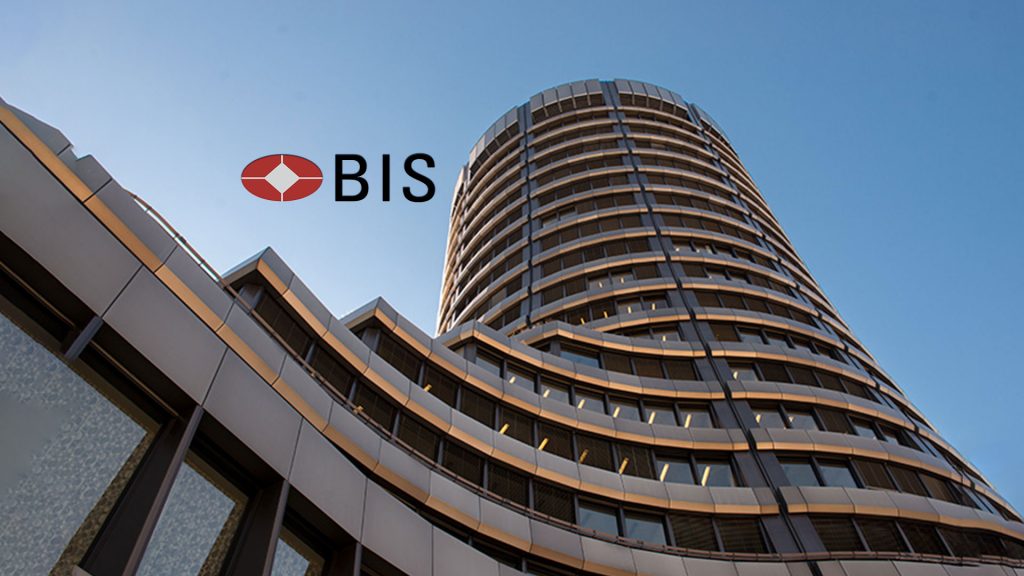
It sits in Basel, Switzerland, in an 18 story circular tower that locals call the Tower of Basel. The choice of Switzerland was deliberate, neutral territory accessible to both sides of any European conflict. It has representative offices in Hong Kong and Mexico City. It employs roughly 600 people from around 60 countries. Its staff are not Swiss civil servants, they are BIS employees under its own internal legal framework.
What It Actually Does: The Formal Functions
On paper it does several things:
It acts as a bank for central banks, holding reserves, conducting foreign exchange transactions and providing short term liquidity to central banks that need it. At any given time it holds a significant portion of global foreign exchange reserves, estimates range around 6 to 10 percent of total global reserves.
It produces research and statistics on global finance that are genuinely influential. Its quarterly reports and working papers are closely read by every serious economist and policymaker.
It hosts the Basel Committee on Banking Supervision which produces the Basel Accords, the international framework that sets capital requirements for banks globally. Basel I, Basel II and Basel III have shaped the entire architecture of global banking regulation. These are not legally binding treaties but they function as de facto global law because every major economy adopts them.
It hosts the Financial Stability Board, created after 2008, which monitors the global financial system and makes recommendations. The FSB identified which banks are “systemically important†meaning too big to fail, essentially writing the list of institutions that governments are implicitly obligated to rescue.
The Meetings: Where It Gets Interesting
Every two months the governors of the major central banks fly to Basel for what are called the Global Economy Meetings. There is also a smaller inner group of the most powerful central bank governors.
No agendas are published in advance. No minutes are released afterward. No press conferences follow. Participants do not discuss what was said. The decisions or understandings reached in those rooms are not subject to any democratic review anywhere in the world.
To put this in perspective: the people who control interest rates and monetary policy for the US, EU, UK, Japan, China, Canada, Switzerland and others are meeting privately on a regular schedule with no public accountability for what they discuss or agree. The combined monetary policy decisions of those institutions affect the price of everything on earth, the cost of every mortgage, the viability of every government budget, the employment of billions of people.
The Innovation Committees Nobody Talks About
Beyond the headline meetings the BIS hosts a permanent network of committees:
The Committee on the Global Financial System monitors financial markets and advises on systemic risk. The Committee on Payment and Market Infrastructures shapes how money actually moves globally, the plumbing of the financial system. The Markets Committee coordinates central bank operations in financial markets. The Irving Fisher Committee handles statistics and data standards globally.
Each of these shapes fundamental aspects of how global finance operates with no democratic input.
BIS and Central Bank Digital Currencies
This is the current frontier and arguably the most consequential thing the BIS is working on right now.
The BIS Innovation Hub, created in 2019, is actively developing infrastructure for central bank digital currencies. Project mBridge is a multi central bank digital currency platform connecting China, Hong Kong, Thailand, UAE and Saudi Arabia. Project Dunbar connected the central banks of Australia, Malaysia, Singapore and South Africa. Project Jura tested direct CBDC transactions between France and Switzerland.
The implications are significant. A fully implemented CBDC system would give central banks and by extension the BIS coordinating framework the ability to track every transaction, program money to expire, restrict what categories of things money can be spent on, and turn off access for individuals or entities. Whether that power would be used that way is a separate question from whether building that infrastructure concentrates an unprecedented level of financial control.
The Governance Question
The BIS is nominally owned by its member central banks, currently 63 of them. They hold shares and receive dividends. But governance is controlled by the board of directors drawn from the major central banks. Smaller member central banks have limited influence. And since many central banks are themselves not fully accountable to their own governments, the chain of democratic accountability is extremely thin by the time you get to BIS decisions.
The Federal Reserve for example is a quasi private institution. It is not a government agency in the conventional sense. Its regional banks are technically owned by member commercial banks. So the chain runs: private commercial banks partially own the Fed, the Fed sits on the BIS board, the BIS coordinates global monetary policy. Democratic governments sit largely outside that loop.
What Serious Critics Say
This is not just internet skeptics. Serious mainstream critics include:
Mervyn King, former Governor of the Bank of England, wrote in his book that central bank independence has become a shield against democratic accountability rather than just a technical safeguard against political manipulation of interest rates.
Raghuram Rajan, former IMF chief economist and Reserve Bank of India governor, documented how BIS coordinated low interest rate policies exported financial instability to emerging markets.
William White, former BIS chief economist, publicly warned before 2008 that BIS member central banks were collectively creating the conditions for a catastrophic crisis and was essentially ignored by the same institutions he was part of.
The Honest Summary
The BIS is not a secret government. But it is a real institution with extraordinary legal immunity, genuine coordinating power over global monetary policy, no democratic oversight, and a history that includes surviving a legitimate vote to dissolve it during World War II while processing looted gold.
The question is not whether it exists and has power. It does and it does. The question is whether the people inside it are wise and well intentioned stewards of that power or whether the structure itself is the problem regardless of intentions. Given that the structure has no accountability mechanism built in, that question may be unanswerable from the outside by design.